
What Are Tiles? | GL Stone Expo Expert Guide
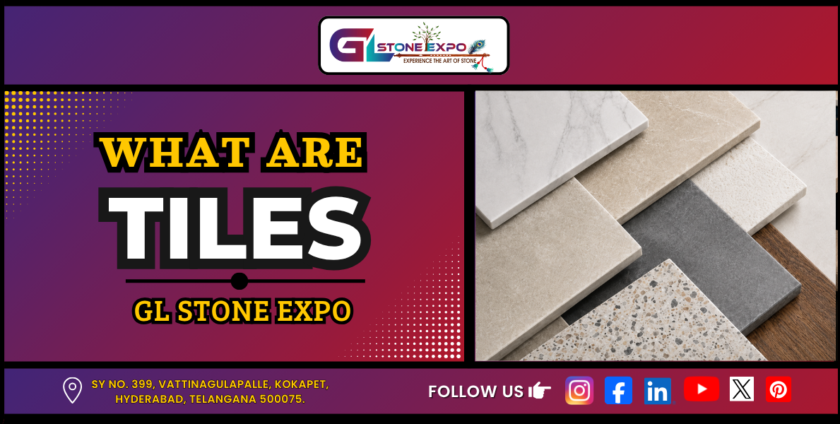
So what are tiles, actually? A tile is a flat piece of material, usually square or rectangular, laid across a floor, wall, or countertop to protect the surface underneath and give it a finished look. Simple enough on paper. What that description doesn’t explain is why almost every building you’ve ever walked into, homes, offices, hospitals, hotels, ends up covered in these things.
Here’s the gap most people never close. They can spot a tile the second they see one, but couldn’t tell you what the word actually means, or why a builder reaches for tile over paint, wood, or bare cement. That’s the gap this guide is here to close, one question at a time.
A single tile doesn’t do much on its own. Line up a few dozen of them edge to edge and something changes. They move from separate pieces to a tiled surface – something built to wear with constant foot-traffic and feel complete rather than rough. The remainder of this guide details this transition: what a tile is, what tiles are used for and why they have enduring appeal as a construction material.
What Is a Tile?
In its simplest sense, a tile is basically a flat object (often square and quite often also flat) used not to hold itself up (like the brick in the back of a wall will) but placed over the object it lies on top. It’s made from whatever strong stuff it needed: porcelain, ceramic, stone, whatever fits the needs for the setting. And the material changes but that won’t much affect what a tile is.
On its own, a single tile isn’t really doing its job yet. It has to sit next to other tiles, edge to edge, before it becomes part of anything useful on a floor or wall.
What Is the Purpose of Tiles?
Ask around why someone’s kitchen floor is tiled and you’ll hear the same handful of answers. It’s easy to clean. It holds up better than most alternatives. And, honestly, it looks better than bare cement.
Those three reasons are more or less the whole job description. A tile sits over a surface, protects it, and along the way makes that surface simpler to clean and nicer to look at.
Where it gets interesting is appearance. Two floors made out of tile can protect a space the same amount, while still appearing nothing like one another due to how wide the palette of colours, textures and finishes in tiles is. This comes back to a matter of taste, less one of technical concerns-part of the reason the in-person experience of browsing at a showroom tends to take an unexpected, significant role.
What Are Tiles Used For?
Tile mostly shows up on three kinds of surfaces: floors, walls, and a handful of architectural spots like countertops. Here’s how each one actually uses it.
| Surface | How Tiles Are Used | What They Add |
| Floors | Tiles get laid edge to edge across the base surface, forming one continuous, walkable covering. | A floor that handles daily foot traffic and cleans up far more easily than bare cement or wood. |
| Walls | Tiles are fixed directly onto the wall, usually in kitchens, bathrooms, or anywhere dealing with splashing or damp. | A wipeable surface that resists staining and outlasts plain paint in wet spots. |
| Other Architectural Surfaces | Tiles turn up on countertops, backsplashes, and a few decorative corners of a building, depending on the design. | A finished, deliberate look in smaller areas, without tiling the whole room. |
Beyond that, tile shows up in odder places too, a stair riser here, a fireplace surround there, but those are exceptions rather than the rule. For most homes and buildings, floors, walls, and the occasional countertop cover almost everything.
Why Are Tiles Commonly Used in Buildings?
Homes, offices, public buildings: tile keeps showing up because not much else handles the same mix of demands. Paint gives up fast on a wet bathroom floor. Wood struggles against standing water, especially once the Hyderabad monsoon sets in properly. Bare cement is uncomfortable underfoot and never really looks finished.
Tile takes the wear, cleans easily, and comes in enough finishes that practical doesn’t have to mean boring. Worth saying, though: performance depends on the actual tile you choose. A cheap option in a busy passage won’t hold up the way a well-chosen one does, and that’s worth figuring out before buying, not after.
What Do Tiles Actually Do?
Cut through the marketing language and here’s what tile actually does.
Covers the surface. Protects what’s underneath. Finishes the look. Makes cleaning easier. Adds some visual character to the room.
That’s the whole list. Every tile does these five things, regardless of material or brand.
What Is a Tiles Surface?
Here’s something most people never separate in their head: a tile and a tiles surface aren’t actually the same thing. A tile is one object. A tiled surface is what you get once a number of tiles are laid down and locked into place together.
That distinction matters more than it sounds like it should. Most of what people actually wonder about, why the joints look uneven, why one patch looks different from the rest, are really questions about the surface, not about any single tile.
Where Are Tiles Commonly Found?
Homes are the obvious answer: kitchens, bathrooms, entryways, sometimes an entire flat or independent house. Step outside a home, though, and tile is still everywhere.
Hotel lobbies, Restaurant floors, Office washrooms, Hospital corridors. Wherever there’s constant footfall and someone needs the floor to stay clean without a full-time crew on it, tile tends to turn up.
Understanding Tiles Before Visiting a Showroom in Hyderabad
Walk into any tile showroom in Hyderabad and you’ll get hit with dozens of finishes, sizes, and materials all at once, packed into a fairly small space. Under showroom lighting, a lot of them start looking alike, though they won’t look the same once they’re actually down in your kitchen or bathroom.
Knowing the basics before you go in saves some grief. A tile is one piece. A tiled surface is the finished result. Material, size, and finish are three separate decisions, not one. That’s really the value GL Stone Expo offers early on, a place to see real tiled surfaces under real light before the harder decisions start piling up.
A Simple Everyday Example
Picture a bare floor in a house nobody has moved into yet, just cement, nothing else. Now picture tile going down across it, piece by piece, until the whole floor is covered.
What used to be a construction site turns into somewhere you’d actually want to stand barefoot.
That’s really the whole idea. Individual pieces, put together, doing the job they were made for.
What Are Tiles?
| Question | Simple Answer |
| What is a tile? | An individual piece used to cover a surface. |
| What is a tiled surface? | A larger, continuous surface formed by multiple tiles laid together. |
| What are tiles used for? | Mostly covering and finishing floors, walls, and related surfaces. |
| Why are tiles used? | Protection, easier maintenance, durability, and appearance. |
| Where are tiles found? | Homes, offices, retail spaces, hotels, and other buildings. |
Conclusion
If there’s one thing worth taking from all this, it’s the difference between a tile and a tiled surface. Nearly every other tile question, material, size, finish, price, comes back to that one idea eventually.
Choose the right material or finish for a specific space is a longer, far more personal call, since it depends on the room, the light, and how you actually plan to use it.
If you’re at that stage and somewhere around Hyderabad, drop by GL Stone Expo and see what’s on the floor. Tile looks different in person, under real light, than it ever does in a photograph.
Frequently Asked Questions – (Faqs)
1. What are tiles in simple words?
In simple words, tiles are individual pieces of material used to cover floors and walls, creating a surface that’s protected and easier to keep clean than what’s underneath it.
2. What is the main purpose of tiles?
Mainly, tiles exist to protect a surface and give it a finished look, while making it simpler to clean and maintain.
3. Where are tiles commonly used?
Mostly on floors and walls, though you’ll also spot them on countertops and select decorative surfaces around homes, offices, and other buildings.
4. What is the difference between a tile and a tiled surface?
A tile is a single piece. A tiled surface is what you get once a number of tiles are laid and fixed together.
5. Why are tiles commonly used in buildings?
As a category, tiles combine durability, protection, easy upkeep, and a finished look, and that combination matters across homes, offices, and public spaces alike.
- By: Rajesh" >Rajesh
- Tags: Tiles, what are tile used for, what are tiles
- Category: Blog, Tiles
- 0 comment
Leave a Reply